For decades, parents were confused about introducing nuts to baby. They were told to delay giving highly allergenic foods like peanuts. almonds, cashew and other nuts to their baby, until they were 1-2 years old. I followed the same advice but was torn between medical recommendations and age-old advice given by my mother. To compromise, I waited till 9 months and then introduced nuts gradually. Of course, nothing happened and I shared the same advice in my recipes too. Today, the medical consensus has completely flipped: introducing nuts to babies early and is considered one of the most effective ways to actually prevent food allergies from developing.
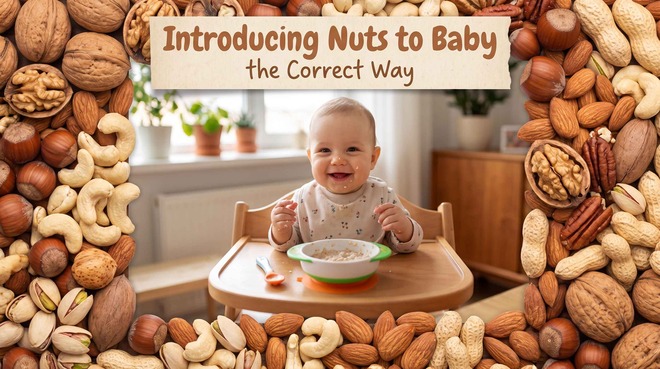
Based on many researches (like the LEAP study), pediatricians now recommend introducing nuts as soon as your baby is ready for solid foods—typically around 4 to 6 months of age—provided they don’t have severe eczema or an existing egg allergy (in which case, consult your pediatrician first). If there is existing allegy in baby’s direct family like parents or grandparents, I would recommend to err on the side of caution and consult baby’s doctor.
How to introduce nuts to baby for the first time
Because nuts are among top allergens, the very first introduction of nuts to babies should be treated carefully. Introduce one new nut at a time (e.g., peanut first, then almond a few days later) so you can pinpoint the cause if a reaction occurs.
1.Prepare a safe consistency: Never use whole nuts or thick globs of butter
Prepare a nut powder and mix with with baby’s porridge. There should not be big pieces or chunks in baby’s food.
2.Offer a tiny taste:
Dip the very tip of a baby spoon into the thinned puree and offer it to your baby.
3. Wait for 10 minutes
Do not offer any other foods during this window.
Watch closely for immediate signs of an allergic reaction, such as hives around the mouth.
4.Offer the remainder:
If there are no symptoms after 10 minutes, you can serve the rest of the prepared portion at the baby’s normal eating pace.
5.Monitor for 2 hours:
Keep your baby awake and observe them. The vast majority of severe allergic reactions happen within minutes to two hours after ingestion.
Safe Preparation Methods
Whole nuts, chopped nuts, and thick globs of nut butter are severe choking hazards. A baby’s airway is roughly the diameter of a drinking straw, and thick nut butter can easily cement in the throat. You must always alter the texture before serving. Even though nut butters are recommended in many places, it is best to introduce nuts as part of out Indian traditional foods like Sattu mavu which are finely powdered and mixed with milk or water.
Watching for Allergic Reactions
Reactions can range from mild to severe. If you notice any signs of a severe reaction (anaphylaxis), contact baby’s doctor and emergency care immediately.
- Mild Symptoms: A few isolated hives around the mouth or face, mild redness, or an upset stomach. Stop feeding the allergen and contact your pediatrician for guidance.
- Severe Symptoms : Widespread hives across the body, swelling of the lips, tongue, or face, persistent vomiting, coughing, wheezing, or difficulty breathing, lethargy, or a sudden change in skin color (pale or bluish). Rush to emergency care immediately.
Once you have safely introduced a specific nut without a reaction, the key to building sustained tolerance is keeping it in their diet regularly—aim for offering it about 2 to 3 times a week in gradually increasing quantities.
Baby Food Recipes for 6-9 months

More from my site
 Art as a Teaching Tool
 Dates, Seeds & Nuts Balls/ Laddoos, Dry fruits laddu for toddlers and kids, Weight gain recipe for kids
 8 Bruschetta( Snack/ Breakfast) Recipes for kids
 50+ Independence Day, Republic Day Ideas- Crafts/Food/Books/Dress up/Colouring pages
 Introducing formula to exclusively breast-fed baby
 Amazon Fire TV Stick with Voice Remote